

This shift is all about building inner resiliencE
FIRSTLY!
DO YOU WANT TO CONNECT WITH OTHER PEOPLE ON HOW YOU’RE FEELING ABOUT THE CHANGES IN OUR WORLD?
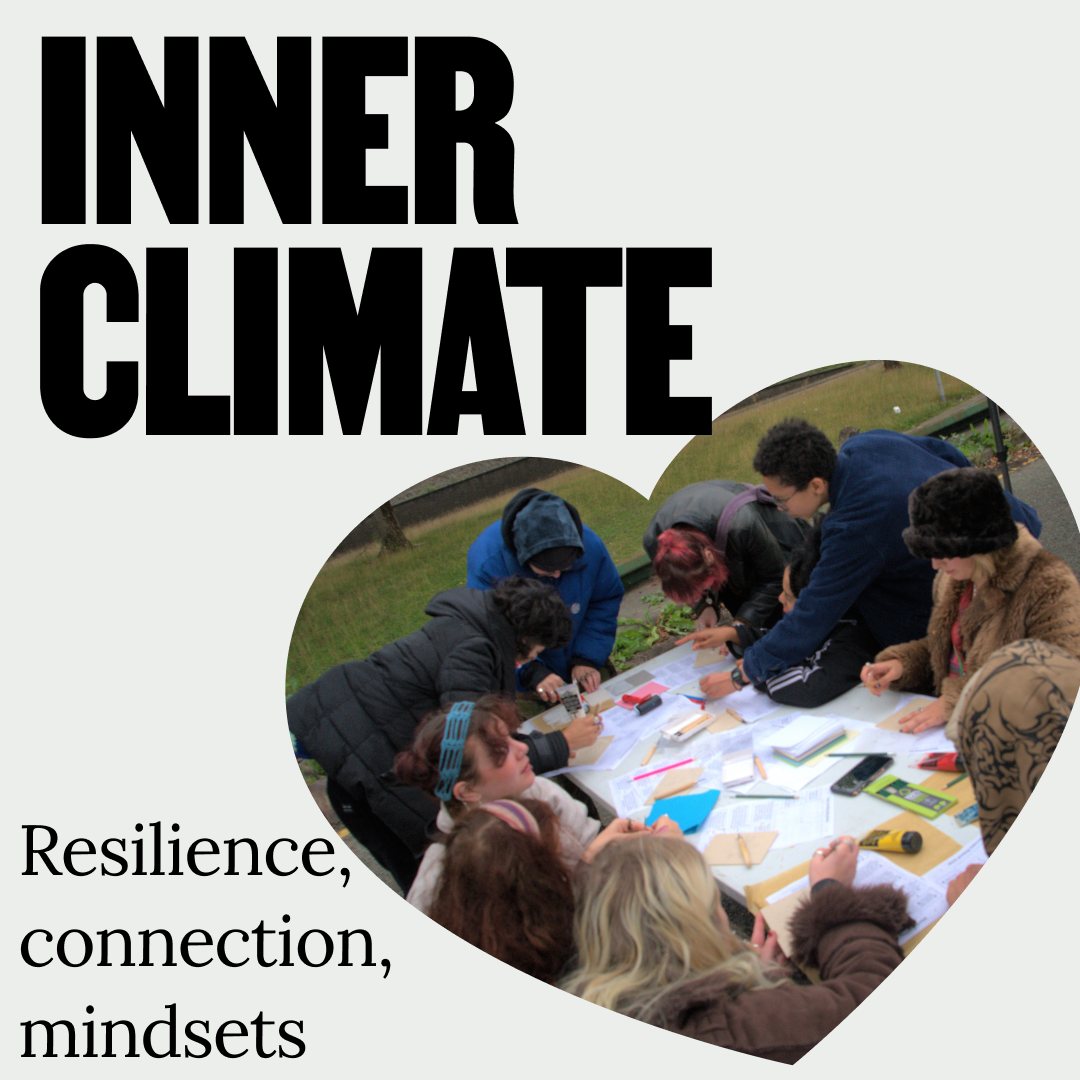
Then check out our open Inner Climate Mondays call — a weekly, rolling online workshop. It’s a dedicated 60-minute space to pause, connect, and explore the emotional, spiritual, and cultural impacts of the times we live in.
RIGHT!
WHAT IS THE
STAY GROUNdED
SHIFT?
As said above, this is all about building inner resilience. And my don’t we need it!
There is a lot going on in our world today. Ecological harm, growing inequality, democratic strain, increasing division, more wars, technological and social changes.
This can be difficult to relate to and process, and it can be tempting to ignore it all—or become consumed by it.
Neither helps us flourish.
Inner resilience is about finding another way.
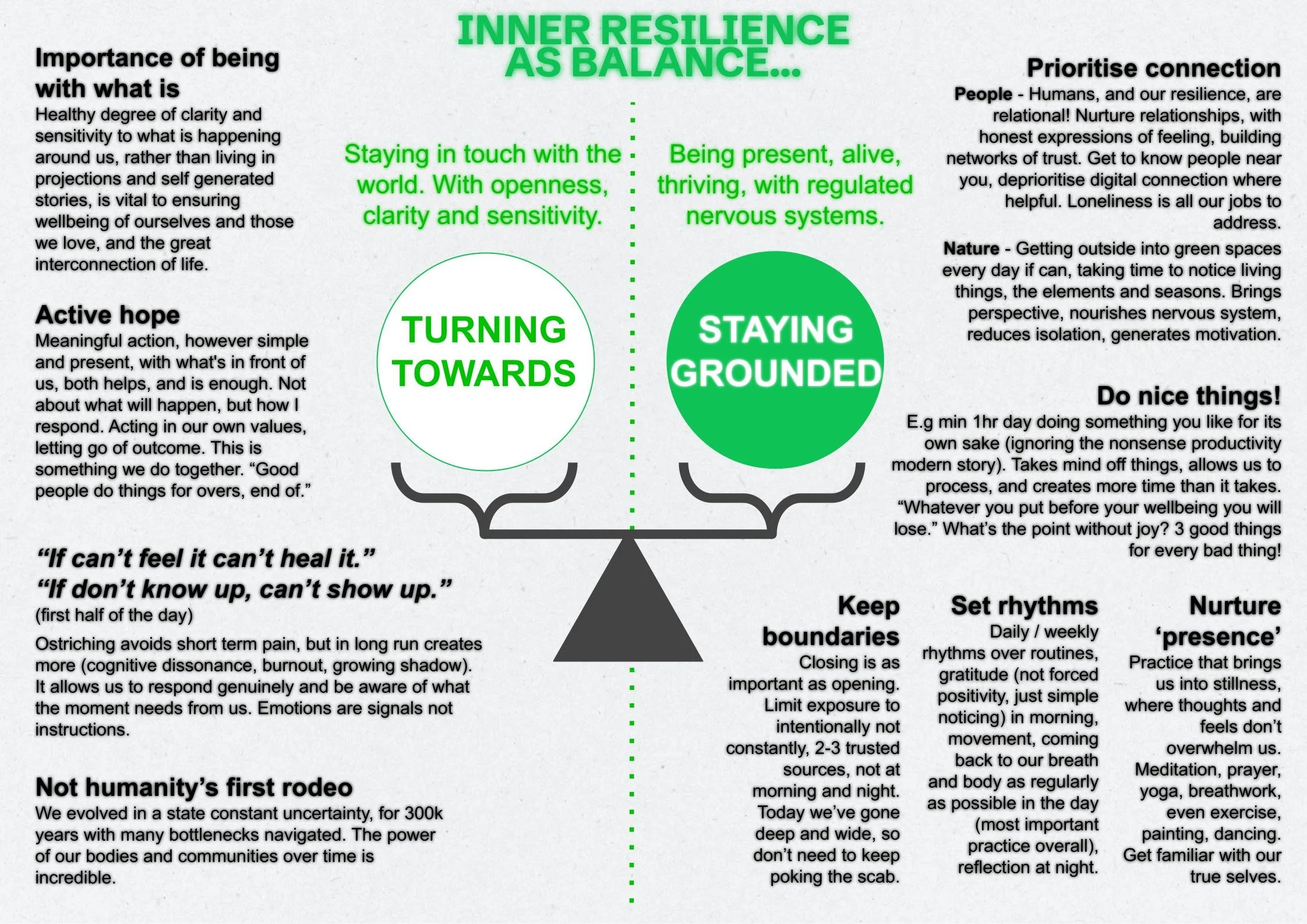
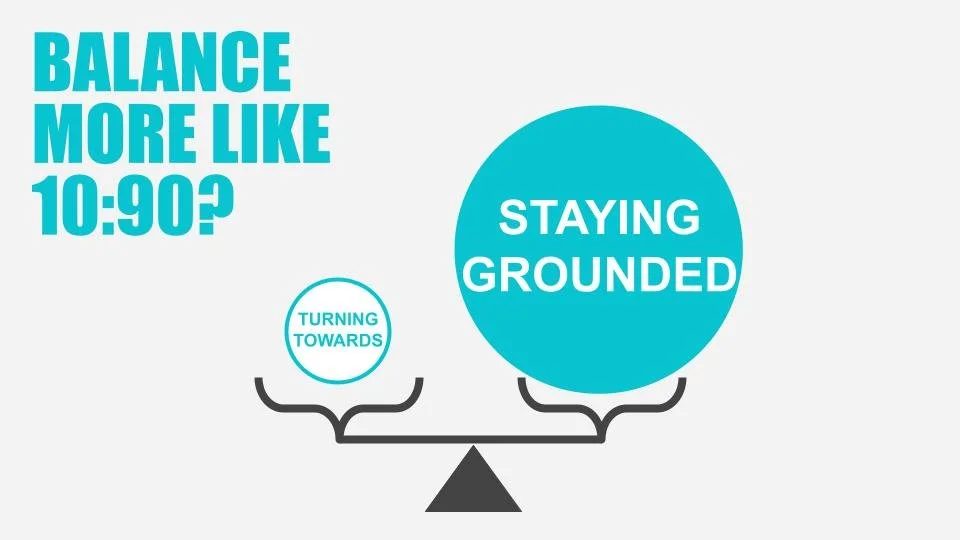
Maintaining that resilience can be seen as a balance between…
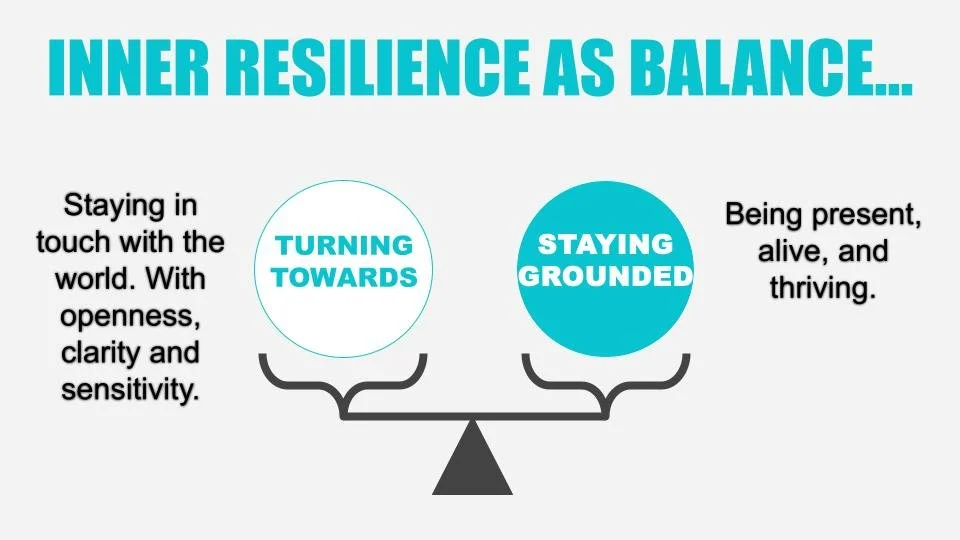
Like breathing in and breathing out, both matter. Together they help us live well—not despite uncertainty, but within it.
But the aim isn't perfect balance every day. In reality its probably 90% focused on staying grounded, 10% on turning towards. Sometimes a small amount of honest engagement is enough to keep us connected to what matters, while the rest of our energy goes into living well.
For this shift, pick at least one action to try…..
Small steps, practised consistently, can change how we experience both ourselves and the world. Try at least one of the below example actions from 1) Stay Grounded and 2) Turning Towards.
1) STAY GROUNDED
Here are some suggestions for things to do to help us Stay Grounded:
DO NICE THINGS!
Try doing something you like for its own sake each day (ignoring the nonsense productivity modern story). Joy and satisfaction are not a distraction from resilience. They are part of resilience. Doing things IRL nurtures us on many levels. It takes your mind off things, allows us to process, brings back fun and enjoyment and creates more time than it takes. Looking after yourself isn't selfish—it helps you show up more fully for others. Think of it like refuelling your reserves of energy, brain-space, creativity and capacity to care. “Whatever you put before your wellbeing you will lose.” What’s the point without joy? A good balance to aim for is to engage in three good things for every bad thing each day: notice something in nature near you, connect with a friend, dance, swim, read, sing, laugh, cook.
Resources
Summary of Stay Grounded Course session 1
KEEP A PERSPECTIVE
Evolution has left us with a natural tendency for our brains to notice the negative and to dwell on it. Remember that no matter how bleak things may seem around you, that is never the whole story. Take steps to balance out your perception of the difficulties by paying attention to the good things. Deliberately pause and spend time noticing any small pleasures around you, really let them soak in using all your senses. And when you encounter something which upsets you or angers you or leaves you overwhelmed, remember that good things are still part of the mix. We can say ‘And it’s also true that…’ while bringing to mind something pleasant, positive or encouraging. It doesn’t have to be big but working to maintain a balanced perspective can make a big change.
Resources
Summary of Stay Grounded Course session 2
Rick Hanson: Train Your Brain: Taking in the Good - Key Points
GRATITUDE
Gratitude is like a skeleton key which unlocks other positive emotions. Ideas for a regular gratitude practice could include keeping a gratitude journal, a bit like a diary. Or listing 3 things to be grateful for at the beginning or end of the day. Or setting a timer for 2 minutes and listing (out loud so that you can hear them!) everything you are grateful for without pausing or thinking too much! And then choosing one of those things, whichever one had a strong pull for you, and really spending time with that memory so that a feeling of gratitude builds in your body and can be felt by your whole system.
Resources
Summary of Stay Grounded Course session 3
SET RhYTHMS
Gradually build up daily or weekly rhythms. It is much easier to do these things if they come naturally to you through repetition (like cleaning your teeth) rather than having to decide whether to do them or not, which takes energy and willpower. Helpful routines could include gratitude (not forced positivity, just simple noticing) in the morning; a regular movement practice like yoga, Qi Gong, walking, swimming or stretching; pausing to notice your breathing and perhaps taking some deeper, slower breaths; coming back to an awareness of your breath and an awareness of how your body feels as regularly as possible in the day; reflection at night. Where do the rhythms of your day come from? Are they imposed on you or do they come from you? Do they feel natural to you or do they grate? Can you change any of them to bring more ease or energy.
BUILD CONNECTION
People - Humans, and our resilience, are relational! A good analogy is that trees need deep roots (which some of these practices build) but they also need other trees to be able to stand upright in the forest. Nurture relationships, with honest expressions of feeling, building networks of trust. Get to know people near you, deprioritise digital connection where helpful. Loneliness is all our jobs to address. Invest in relationships. Share honestly. Ask for help. Offer help. Get to know neighbours. Over to you, what small step could you take to reach out to other people?
Nature - Getting outside into green spaces every day if you can, taking time to notice living things, the elements and seasons. Brings perspective, nourishes nervous system, reduces isolation, generates motivation. When would this fit into your day?
EXPLORE OUR SHADOW
Many of us are wounded by life experiences, by the culture and society we find ourselves in, or by relationships. This can shape our inner world and the way we relate to ourselves, to others and to the wider world. Without help, most of us remain trapped by this conditioning or harm. Therapy, counselling, coaching, support groups, trusted friends, reflective practices or other forms of inner work can help us understand ourselves more deeply and find greater balance. Attending to these needs can open up space and capacity to engage with life more fully. What could you do to begin or deepen some shadow work?
Resources
Psychology Today - Find a Therapist directory
Rick Hanson: Being Well Podcast
Gabor Mate: Do this simple thing every day to change your life
SET BOUNDARIES
Closing is as important as opening! Staying informed doesn't require constant exposure. Choose a small number of trusted news sources and decide how many times you will check them. Avoid endless scrolling. Give yourself permission to step away. Opening ourselves to the world is important. Closing the door sometimes is just as important. Be discerning about what you ‘let in’ as it will colour your internal world. We cannot turn up for ourselves, for others or for the world if we are overwhelmed.
NURTURE ‘PRESENCE’
Practice that brings us into stillness, where thoughts and feelings don’t overwhelm us. Meditation, prayer, yoga, breathwork, even repetitive exercise like running or swimming, painting, dancing, reading or listening to wise guides. Get familiar with our true selves.
Resources
Michael Mead: Living Myth Podcast - Agents of Creation
Sounds True website - ‘Transformational Spiritual Teachings and Courses’
2) Turn towards
Here are some suggestions for actions to take to help us Turn Towards:
ACTIVE HOPE
Meaningful action, however simple and present, with what's in front of us, both helps, and is enough. This is not about what will happen and an end result, but is about how I respond. Acting from our own values, letting go of outcome. This is something we do together. “Good people do things for others, end of.”
Resources
Active Hope free online training
EMBRACE BEING WITH ‘WHAT IS’
Try to notice what lens you are seeing things through or whether you are putting up barriers to engaging with certain situations or perspectives. These filters may be very familiar so they can be difficult to spot. See if you can delay your own judgement about a situation and instead stay in a state of ‘not knowing’, which creates more space to encounter the world and understand it. Use your imagination and the practice of ‘putting yourself in somebody else’s shoes’. This can help us to be with ‘what is’ with fewer barriers or filters. See if you can notice what stories you are telling yourself (it’s all the fault of …) or what projections and assumptions you may be making. In your imagination, try putting a belief through a trial, with evidence for and against to see what verdict a judge might reach and whether your view is valid. A healthy degree of clarity and sensitivity to what is happening around us is vital to ensuring the wellbeing of ourselves, those we love, and the great interconnection of life.
Resources
Learn mindfulness in 40 days with Tara Brach and Jack Kornfield - free online course
IF YOU CAN’T FEEL IT, YOU CAN’T HEAL IT
‘Turning towards’ primarily involves allowing ourselves to feel in response to a situation. We can build our capacity to turn towards and to feel through strengthening our inner resilience, using some of the practices suggested above, and through being careful about the volume of what we engage with (think of it like controlling the flow of water from a tap). Only by honestly engaging with the discomfort, can we begin to digest it and perhaps even to use it as fuel for positive ways to engage and to live. Turning away from the pain and ostriching avoids short term pain, but in the long run it creates more, a bit like a pressure cooker building up steam (cognitive dissonance, burnout, growing shadow). Engaging with our emotions, to the degree that we are able to do so, allows us to respond genuinely and be aware of what the moment needs from us. Emotions are signals not instructions. They move through us when we pay attention to them and give them space. Can you peep through the curtains at a situation you have been avoiding and allow yourself to feel what you feel in response? Take care to only take in as much as you can manage and talk to yourself kindly as you do this. It’s ok to cry! It’s ok to be angry! These are normal responses to the world we find ourselves in.